
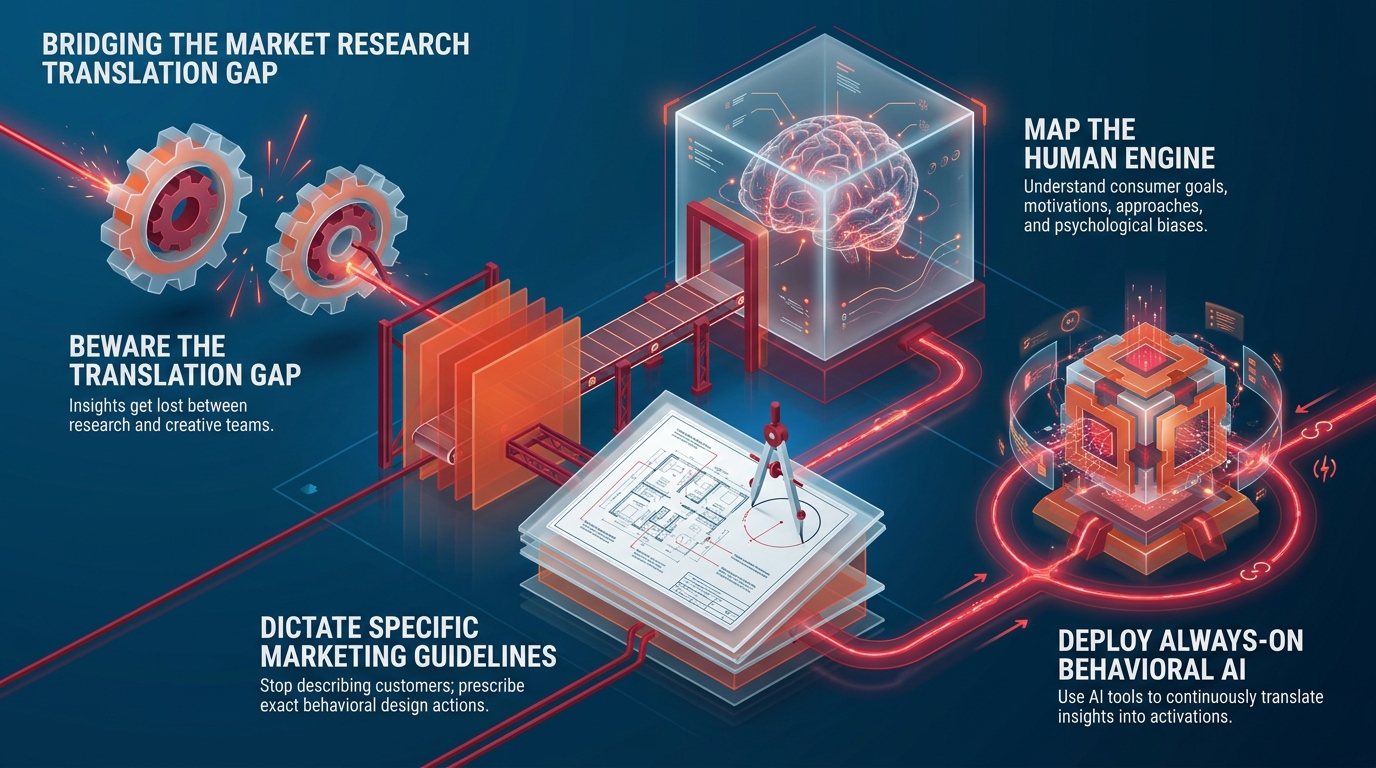
Why Market Research Fails Marketing Campaigns
Executive Summary
Most market research fails at the execution phase: Brands routinely misinterpret deep human insights because consumer data is passed through multiple departments without a behavioral scientist translating the findings into actual marketing guidelines.
Creative interpretation flattens psychological meaning: Without strict guardrails, creative teams will rely on their own subconscious biases to interpret research, often resulting in campaigns that sound logically correct but fail to trigger consumer action.
Behavioral Activation Briefs eliminate creative guesswork: A traditional research deck describes the customer, but a behavioral brief prescribes the exact messaging, visual cues, and structural framing required to trigger a specific subconscious response.
Artificial intelligence scales behavioral translation: Bevi, Mindstate Group's proprietary behavioral insights activation system is designed to automatically analyze consumer data and generate behaviorally optimized marketing copy, allows brands to maintain psychological consistency across all channels without needing a scientist in every meeting.
The Strategic Shift
You know exactly how this story goes.
You commission a massive piece of research. The insights team or your external partner comes in and presents a dense, beautifully designed 40-slide deck. The marketers nod. The creative team takes notes. Everyone in the room agrees with the recommendations. There are high-fives. You think you have total alignment.
Then the campaign launches months later. And it looks absolutely nothing like the research suggested.
The insight was mangled. The meaning was flattened out as it moved through the corporate machine. And the resulting creative execution completely fails to drive sales.
If you have watched the 2016 sci-fi movie Arrival, you have seen this dynamic play out perfectly. In the film, linguist Louise Banks is brought in to translate an alien language. At a critical moment, she translates a symbol from the aliens as "use weapon." The military immediately panics and prepares for global war.
But she stops them. She explains that the symbol for "weapon" could also be translated as "offer tools." One interpretation leads to a massive, catastrophic mistake. The other leads to an unprecedented technological leap.
"In the corporate world, consumer insights professionals are your linguists" - Will Leach.
They are translating the complex, messy language of human behavior into business strategy. But when they hand over a generic deck and leave the room, the brand managers and creative teams are left to interpret the symbols on their own. They see "weapon" when they should have seen "tools."
This happens all the time. Your brand managers and your creative teams speak two completely different languages than the language of consumer insight.
There is an illusion in marketing that landing a great presentation in a workshop is the same thing as landing the insight inside the actual brand plan. It's not. The second that insight leaves the market research organization and enters the daily operational press of corporate America, it gets soft. It gets altered.
If you don't aggressively control the translation of your research into specific marketing executions, somebody else will do it for you. And they will probably get it wrong.
The Core Philosophy
When I founded Mindstate Group years ago, I did it because I saw a massive gap between what consumer insights were showing and what marketers actually took away. We had cultural anthropologists and neuroscientists doing incredible work. But when the creative launched, I would look at it and think, "Boy, I was dead wrong to trust them with the raw data."
We had to stop asking creatives to interpret psychology.
"Stop just describing the customer and instead start dictating the marketing guidelines." — Will Leach
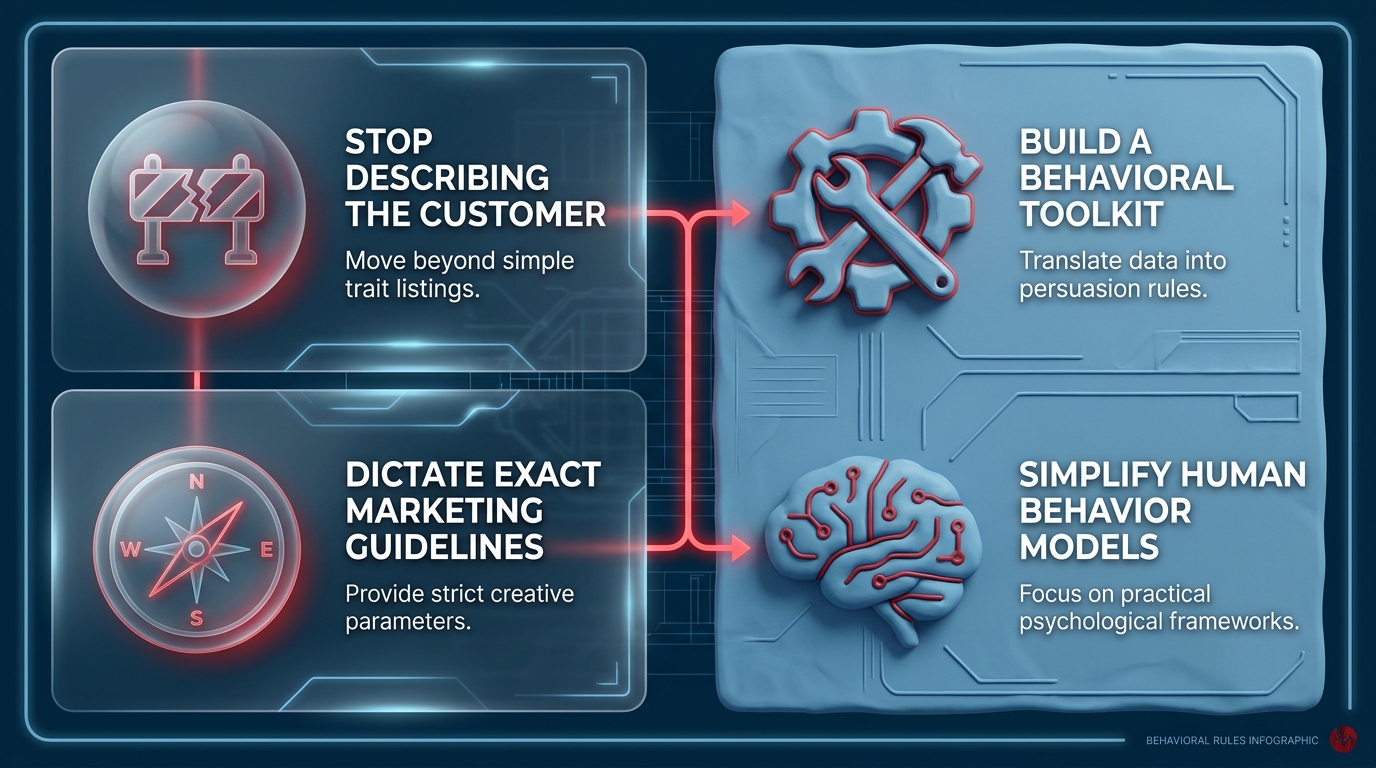
Describing your customer's wants, needs, desires, and belief systems is important. But it is entirely insufficient. What your brand actually needs is a behavioral design toolkit. You must translate what you know about the consumer into highly specific rules that the brand must follow to persuade people to buy.
This requires a mental pivot. All brand decisions are ultimately just people decisions. Since we are operating a human model, we need a simpler framework for understanding human behavior and translating those insights into action.
The Implementation Blueprint
If your brand team currently receives an insight deck and they cannot run that exact play without calling you for clarification, your translation is not done. You have left too much to chance.
Here is how you stop describing the customer and start dictating the behavioral guidelines.
Step 1: Map the Psychological Engine
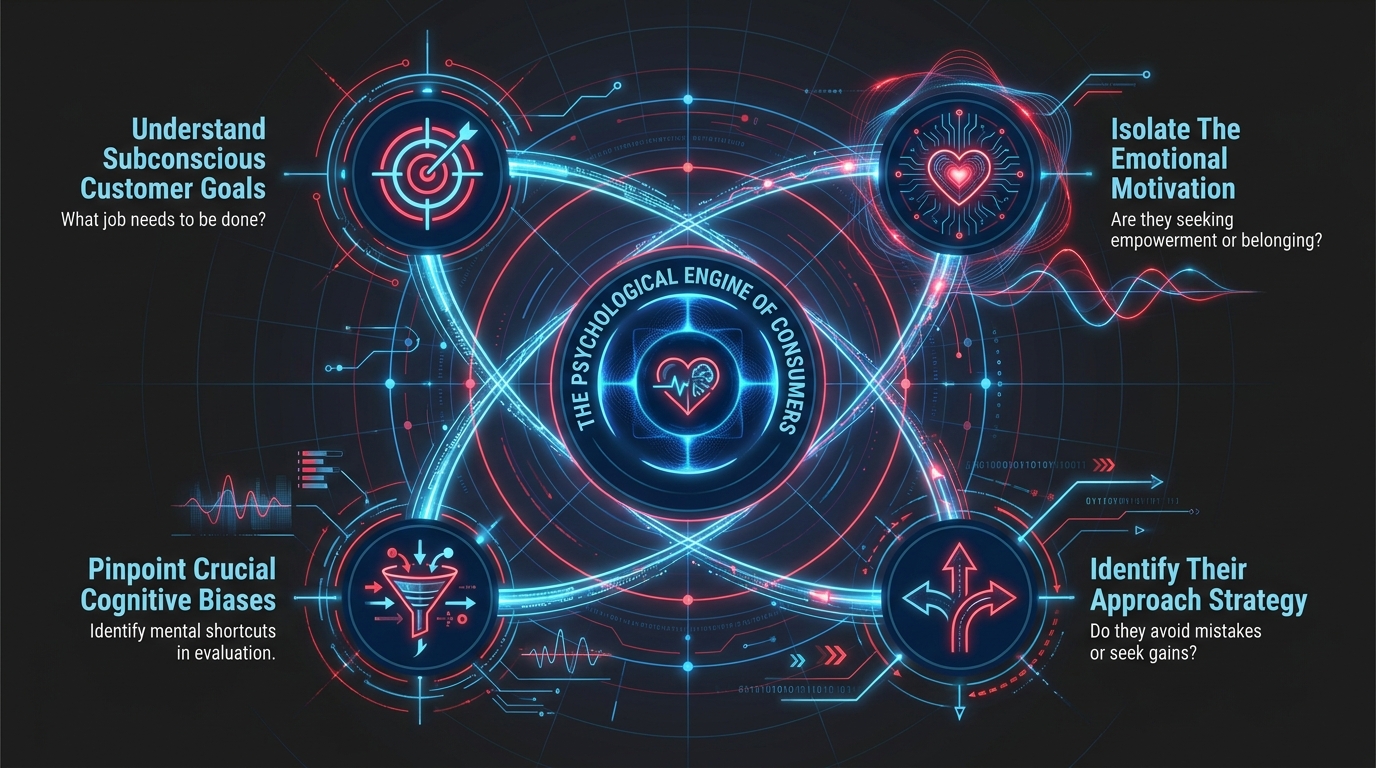
Before you can dictate the marketing, you have to understand the specific subconscious drivers at play. We use the Mindstate model to map this out. You are not looking for demographic or even psychographic data. You are looking for the exact psychological moment a decision is made.
First, you must understand their goals. What is your customer actively trying to achieve in the moment they interact with your category? What job needs to be done?
Second, you isolate the motivation. What is the emotional driver behind that goal? Are they seeking empowerment, belonging, or achievement?
Third, you identify their approach. How do they go after that goal? Are they cautious and focused on avoiding mistakes? Or are they optimistic and adventurous, seeking to maximize their gains?
Finally, you pinpoint their cognitive biases. These are the mental shortcuts your customers rely on when evaluating choices.
When you combine these four elements, you capture a complete psychological profile of the exact moment a purchase decision happens. We capture this through Behavioral Discoveries®, a specialized qualitative research process that identifies the unstated emotional and psychological drivers behind consumer behavior.
Step 2: Write the Behavioral Activation Brief
This is where the actual translation happens. You are moving from the human engine to the brand output.
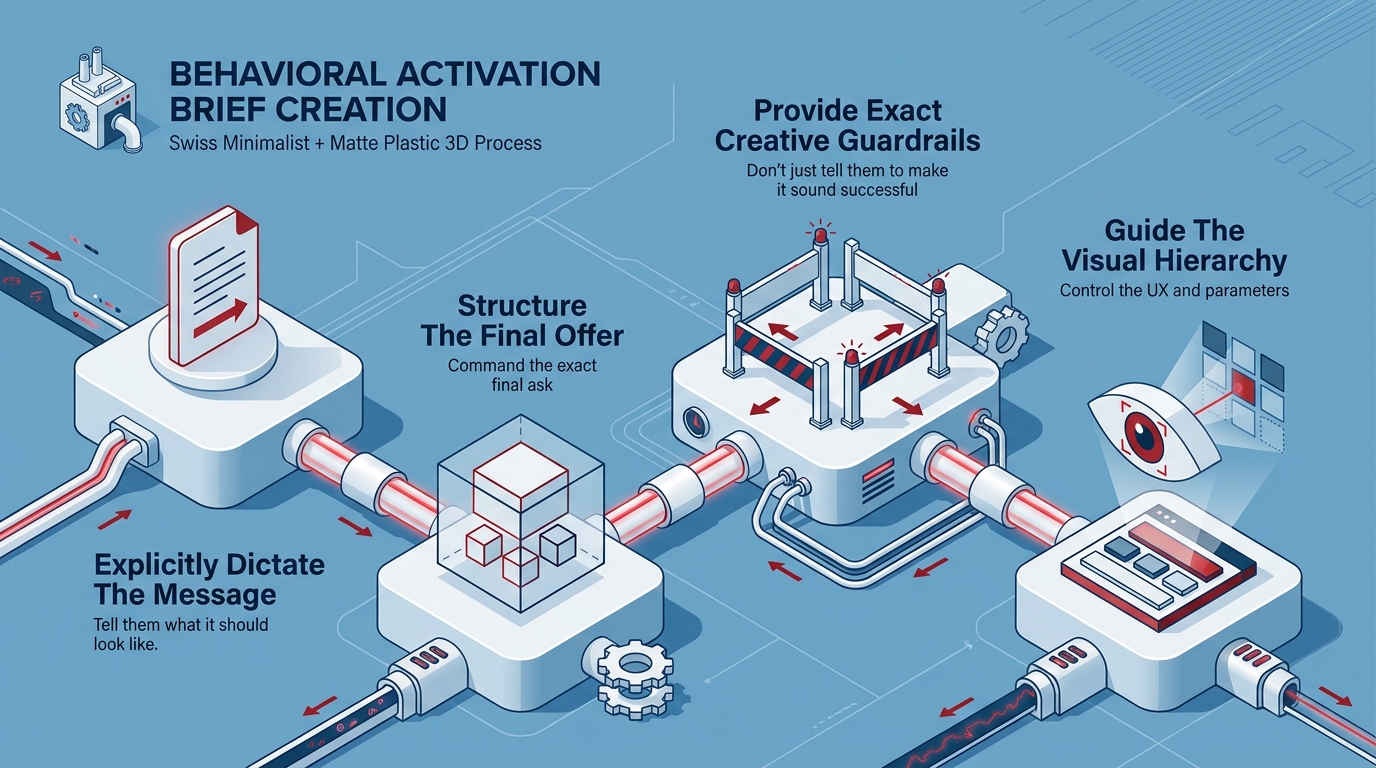
You take the four components of the Mindstate model and you build a highly prescriptive marketing activation brief. This brief must explicitly dictate what the message should look like, how the offer is structured, and exactly what the final ask must be to get your customer to act.
If your research identifies that your target buyer is in an optimistic achievement state, you do not just tell the creative team to "make our brand sound successful." You provide exact guardrails.
You tell them to frame the features to highlight optimism. You dictate the exact feelings the copy must evoke. You lay out the specific content strategy, the messaging guidelines, the copy rules, and the visual hierarchy. You give them the UX and customer experience parameters.
"You want to ensure that your influence ultimately will influence the actual work, not just become the final slide in a deck that other people read months later and they take away something that you never meant for them to take away." — Will Leach
Your ultimate test is this: Your behavioral design guidelines must be so specific that the creative team only has to focus on the art, the ideas, and the execution. They should never be spending their time trying to figure out your intent.
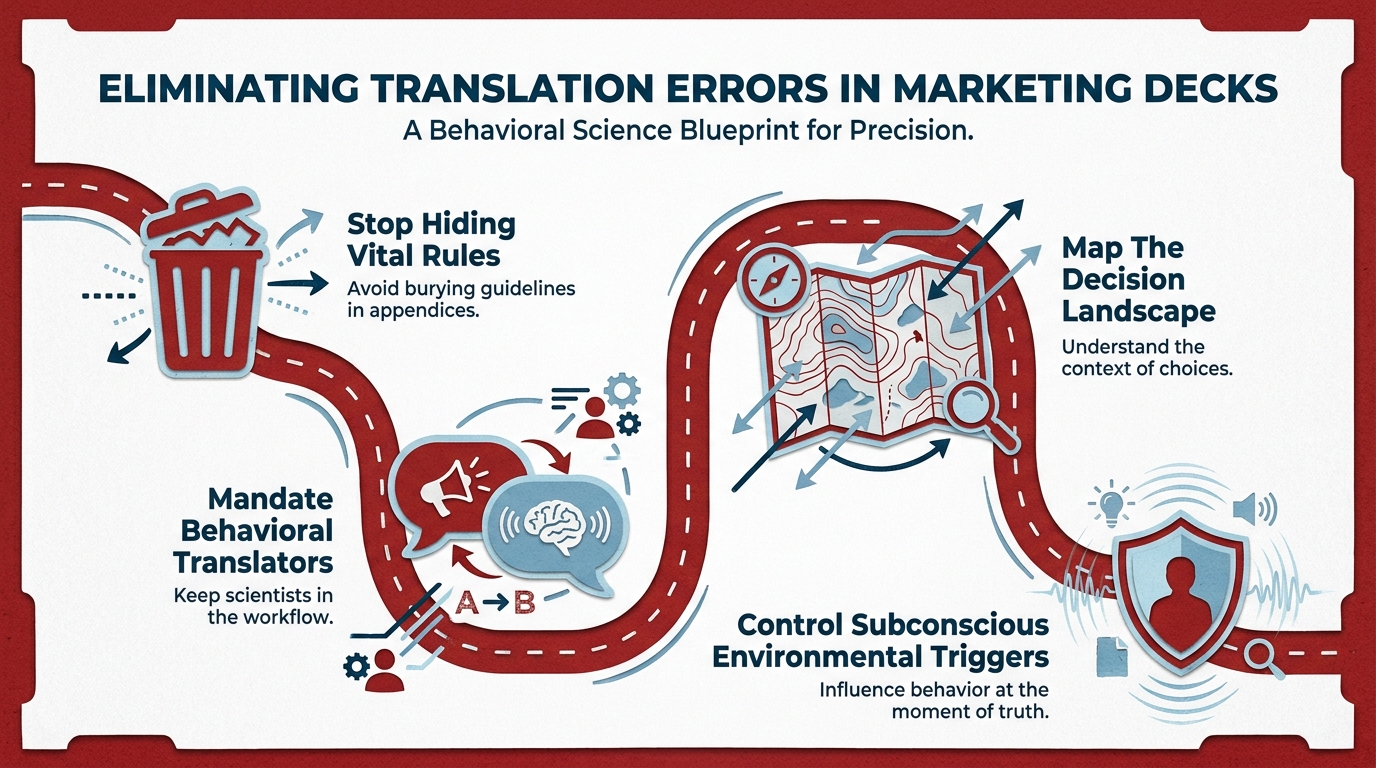
Step 3: Eliminate the Appendix Trap
Even if you build a flawless behavioral activation brief, you face a structural threat. Decks get forwarded.
When a 40-page deck gets emailed to a new agency partner or a junior brand manager three months after the initial readout, they don't read the methodology. They can't know context. They skip straight to the executive summary. If the strict behavioral guidelines are buried in the appendix, the reader is left to interpret the insights on their own. The translation breaks down again.
To prevent this translation war, you need a behavioral translator in every single meeting where the research is discussed. You need someone actively mapping the brand's Decision Landscapes®, a behavioral framework that maps the subconscious rules and environmental triggers influencing how your buyer makes choices in a specific moment.
Step 4: Scale the Translation Process
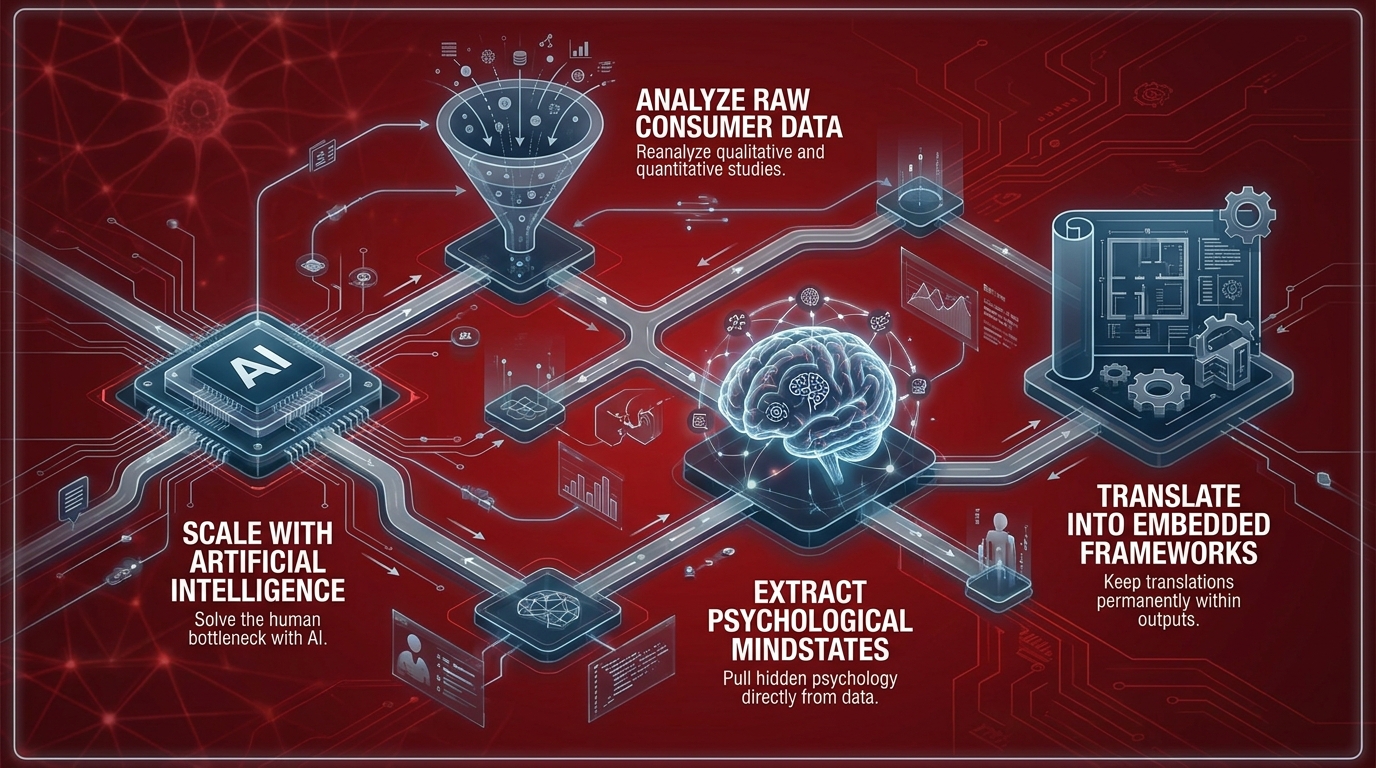
Having a behavioral scientist in every marketing meeting is the gold standard. But it's not scalable. Most organizations cannot afford to place a dedicated behavioral researcher on every Zoom call to police creative alignment.
This is where technology solves the human bottleneck.
You scale this capability using behavioral artificial intelligence. Our behavioral insights activation system, Bevi AI, reanalyzes old studies, NPS, open-ended responses, parses online reviews, and extracts the psychological mindstates directly from your raw data.
But it doesn't stop at extraction. It translates and then activates.
If you need a social media post written through the lens of a cautious, belonging-driven mindstate, the AI applies the exact psychological frameworks from your activation brief to write the copy. Your creative teams can ideate directly through the specific behavioral lens required. The translation is never lost because the framework is permanently embedded in the output mechanism.
Inside the Live Session
Let me show you exactly what it costs when you fail to control the translation. During an Implementation Masterclass, we routinely dissect real-world brand failures to show how easily a good insight turns into bad marketing.
A few years ago, I was consulting for a major Fortune 100 pet food brand. We conducted deep behavioral research on the psychological mindstates pet owners hold regarding their dogs. The data was incredibly clear. We uncovered a powerful combination of success-driven achievement and deep nurturance.
We brought this to the brand. We presented the insight clearly: "Pet parents want to feel successful in loving their pets."
The readout went beautifully. The brand team bought in completely. We thought the job was done.
But then the insight moved through the corporate machine. The creative agency took the concept of "success" and applied their own interpretation to it. The nuance was completely lost.
"We all believe that we're aligned and we know what we're going to do later, but yet later on you find out that we weren't really all aligned. There was something that was mistranslated, a little bit mangled in the interpretation and that can have dire consequences on your brand." — Will Leach
The creative team interpreted our insight to mean that pet parents want to see their dogs being successful. Not themselves as parents. Their dogs.
The resulting campaign was a disaster. The company started running ads focused heavily on dogs winning awards at shows like the Westminster Dog Show. They built a massive national campaign around the concept of canine trophies.
By the time the final campaign crossed our desks, it was too late to stop the train. The translation had landed with a terrible creative execution. And I'll be honest with you. It didn't drive sales at all. Millions of dollars were wasted not because the research was wrong, but because we allowed the creative agency to interpret the psychology.
Instead of letting them guess, we should have used the Mindstate Activation Blueprint, a step-by-step psychological roadmap that translates raw consumer insights directly into specific creative, copy, and design rules. We should have explicitly stated: "Do not show dogs winning awards. Show the owner experiencing pride while performing caretaking tasks."
You can watch this come to life by clicking the video below.
The Behavioral Imperative
Right now, your competitors are passing around generic insight decks and hoping their creative agencies guess the right psychological triggers. They are leaving millions of dollars on the table because their research is getting lost in translation.
You don't have to operate that way. You are the closest person in the building to how your customers actually behave. You have the data. Now you need to take control of the execution.
I challenge you to do this on Monday morning. Take one live research study currently sitting on your desk. Do not stop at the standard recommendations page. Push it further. Translate those findings into a strict behavioral design toolkit. Tell your team exactly how to frame the features, what emotions to evoke, and what visual cues to use.
Stop hoping your insights survive the corporate machine. Start dictating the psychology of your brand.
P.S. Whenever you're ready, there are two ways we can work together.
Behavioral Research - find out what's really driving your customers. Our behavioral science-based research maps the subconscious mindstates behind your customers' decisions and hands you an activation blueprint to align your brand to their emotional needs. It's the work we've done for Fortune 100 companies for years.
Behavioral Activation - Put your customer to work inside your business - in every decision, every day. Bevi, our behavioral insights and activation system, allows you to stop guessing what customers want and start having them work alongside you to codesign the marketing and solutions with you.
Start with a 30-minute introduction session. No pressure. Just fun.
Let's find time to talk by clicking the link below