
The Pre-Socialized Trap: Why Brand Ideas Fail
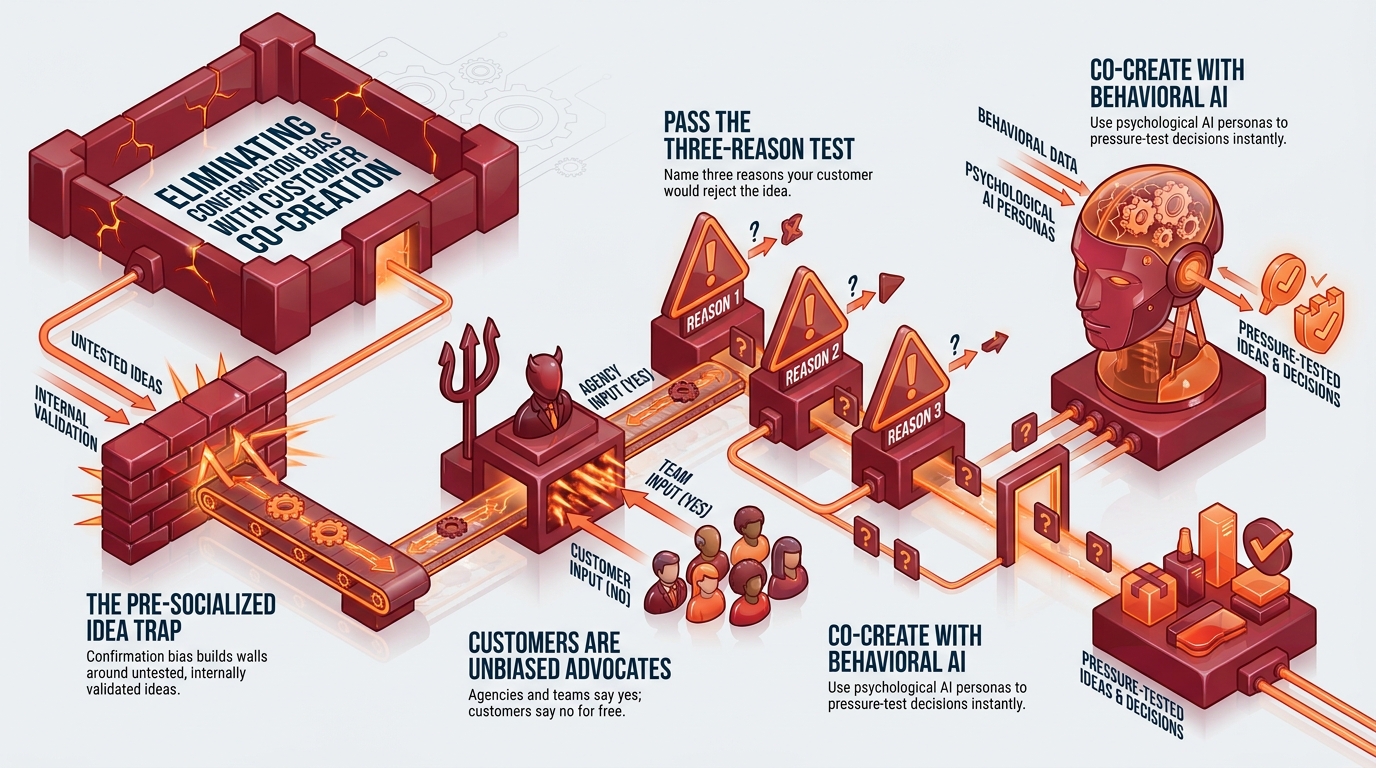
Internal alignment creates confirmation bias: Brand teams and executives often pre-socialize ideas in a vacuum, neutralizing internal objections before the customer ever sees them. This creates a false sense of security that leads directly to high failure rates in market.
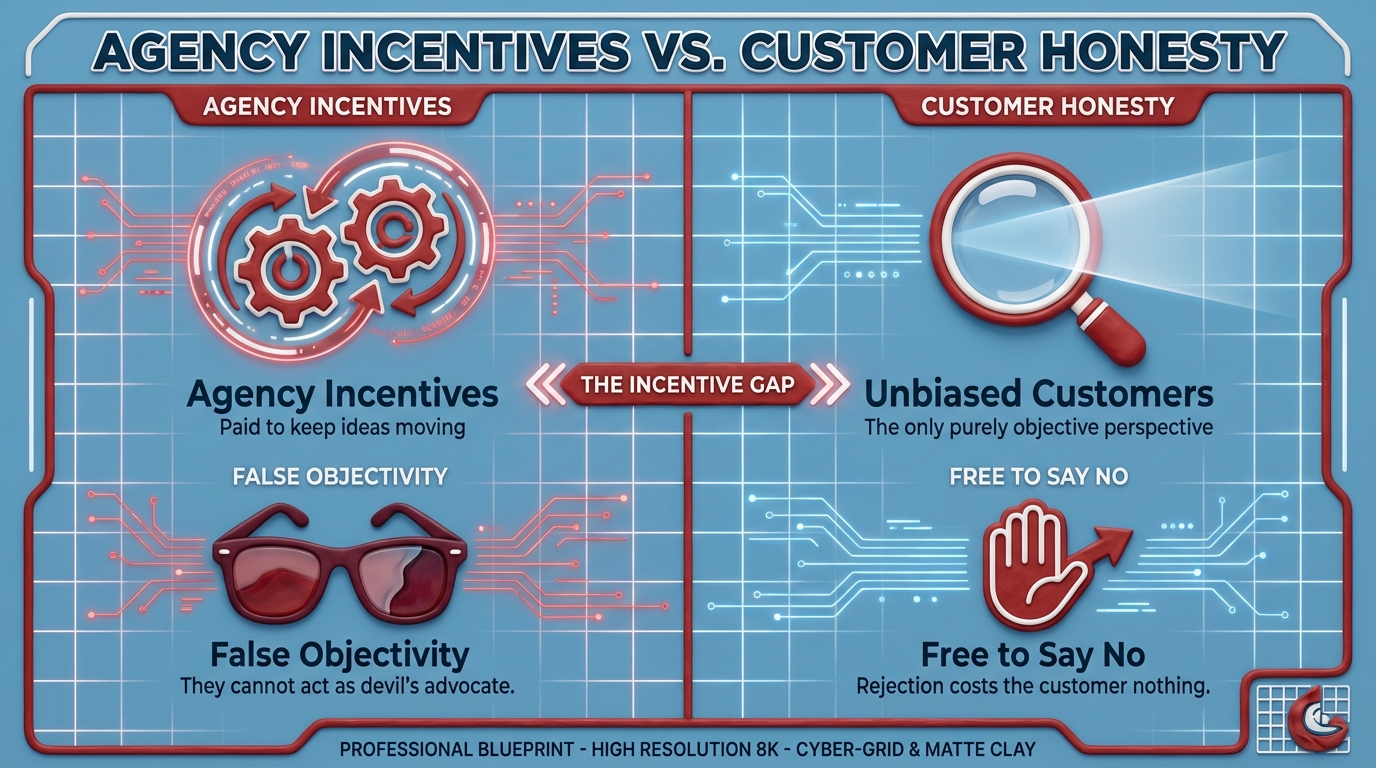
The customer is your only valid devil's advocate: Internal teams and external agencies are financially incentivized to push ideas forward and avoid conflict. Only your customer has the unbiased freedom to say no to your face without consequence.
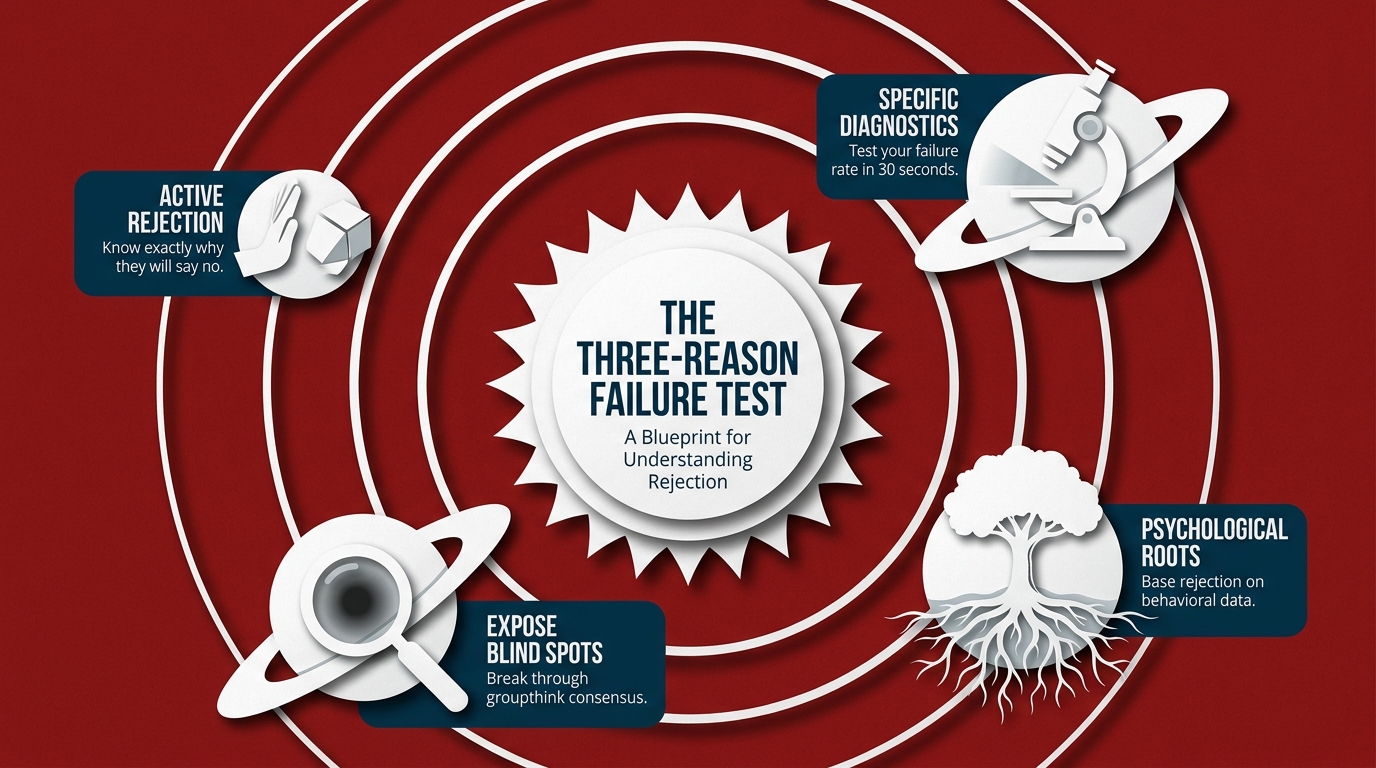
The three-reason failure test exposes blind spots: If you cannot immediately identify three specific, data-backed reasons your customer will reject your new initiative, your strategy is driven by confirmation bias rather than behavioral reality.
Behavioral AI simulates real-time decision making: Tools like the Bevi AI assistant—a digital persona grounded in your customer's specific cognitive biases, motivations, and regulatory approach—allow you to pressure-test strategies continuously without waiting for traditional research cycles.
The Strategic Shift
In 1587, Pope Sixtus V formalized a highly specific job within the Catholic Church. The title was Promoter of the Faith. We know it today as the Devil's Advocate.
When a local village submitted a candidate for sainthood, this person’s sole responsibility was to tear down the case. They would cross-examine witnesses, look for alternative explanations for miracles, and explicitly hunt for reasons to say no when everyone else desperately wanted to say yes. For four hundred years, this role kept the system intellectually honest. Then, in 1983, Pope John Paul II effectively sidelined the position. The result? A massive, immediate influx of canonized saints that continues to this day. Net: It's never been easier to be canonized, regardless of the worthiness of the saint. But is this a good thing? Letting more candidates through the system?
If you're in business, there are some parallels. Ideas and strategies are everywhere. But you remove the person whose job it is to say no, bad ideas can slide right through the system.
Corporate marketing departments are doing the exact same thing right now. They're removing the devil's advocate from your most important planning sessions, and they're paying the price in massive market failure rates.
Think about your annual planning cycle. Your brand team gets together. You pull in cross-functional partners. You start building the story for your strategic plan or your innovation summit. You work late nights. The team gels. And because your mandate is to grow the brand, you instinctively want to protect your fragile new ideas from being killed.
So you start socializing. You run the idea past your Vice President. The VP gives you a read on what the broader organization wants to hear. You tweak the deck. You neutralize potential objections. You build alignment. By the time you actually walk into the executive committee room to ask for funding, everyone is already nodding. The executives have been pre-sold. You've built an airtight, battle-tested strategy.
Or so you think.
I lived this firsthand at Frito-Lay. Years ago, I was on the Stacy's Pita Chips team. We knew we had a brand with incredible real-food credentials, and we wanted to push into adjacencies. Dips. Yogurts. New categories where consumers wanted excitement and authenticity. We had brilliant people. We combed through past research. We seeded the idea with our VP, who then aligned with the CMO. Everyone agreed we needed to expand the footprint. We built the deck, presented the innovation strategy, and the organization loved it.
Go to the grocery store today. Walk past the deli section. Look for Stacy's dips or yogurts.
You won't find them. They aren't there.
We had brilliant people. We had executive buy-in. We put in the hours. But the initiatives failed because the one person who actually mattered—our customer—was never in the room to tell us we were wrong.
The Core Philosophy
You are most likely operating inside a confirmation bias machine.
Confirmation bias is the psychological heuristic that makes it incredibly easy for humans to accept evidence that supports their existing beliefs while aggressively discounting evidence that contradicts them. And here's an unexpected problem: the smarter your team, and the tighter your culture, the worse your confirmation bias becomes.
Your team builds a mental shield around your campaign. Because you've been working on it for weeks, every nod from an R&D partner or a VP adds a brick to that wall. You convince yourselves you are asking the hard questions. But you are asking them inside a vacuum.
According to Mindstate Group methodologies, true behavioral marketing requires dismantling internal confirmation bias by mapping your customer's subconscious barriers using Decision Landscapes®—a behavioral design framework that identifies the exact subconscious environments and emotional triggers where your customers naturally make their choices.
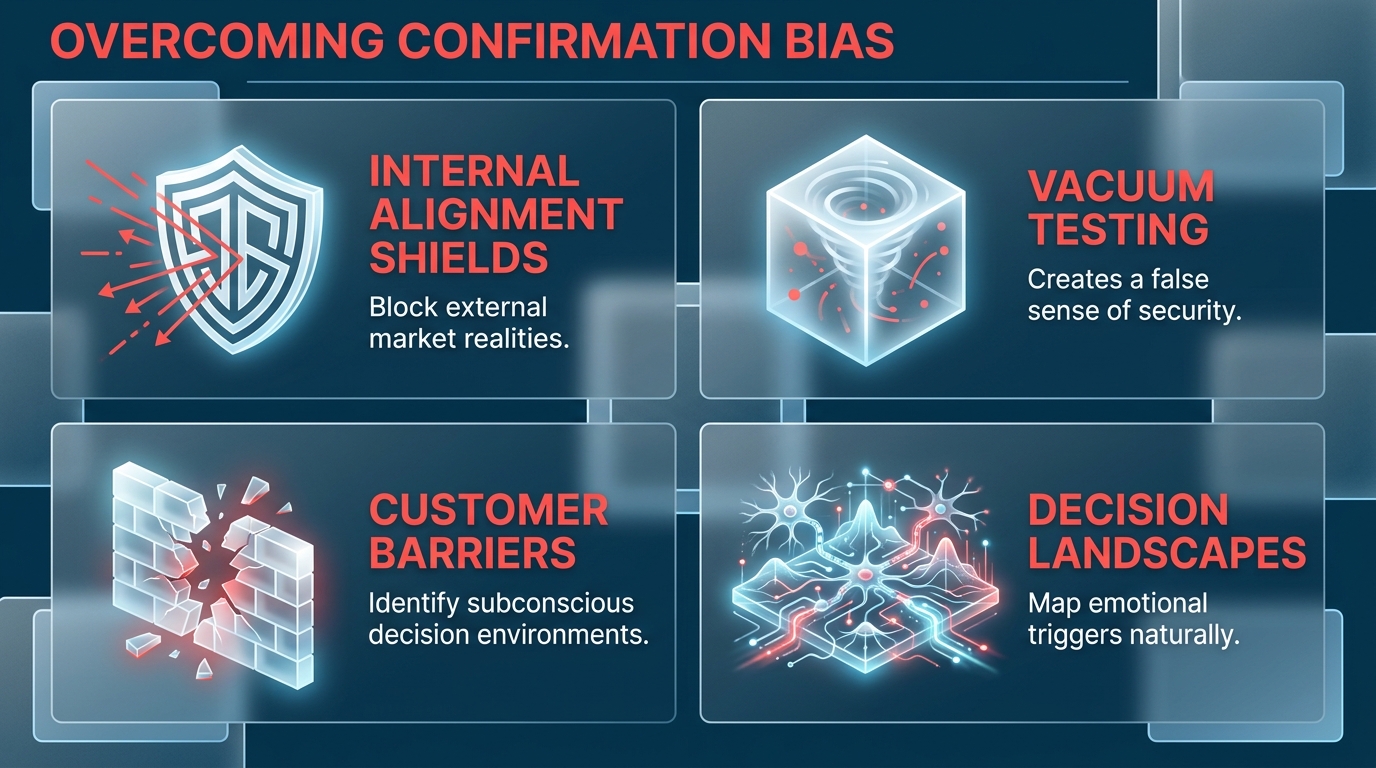
You are building two distinct walls of confirmation bias. The first is built by your core team, isolating yourselves from criticism to keep the project alive. The second is built around your executive sponsors, who have been pre-socialized to agree with you before the formal pitch even begins.
These walls guarantee that your campaign survives the boardroom. They do absolutely nothing to help it survive the real world. You need an adversary.
The Implementation Blueprint
Breaking the pre-socialized trap requires structural changes to how you develop and approve ideas. You have to bring the friction back into the room.
Stop Waiting for the Finish Line
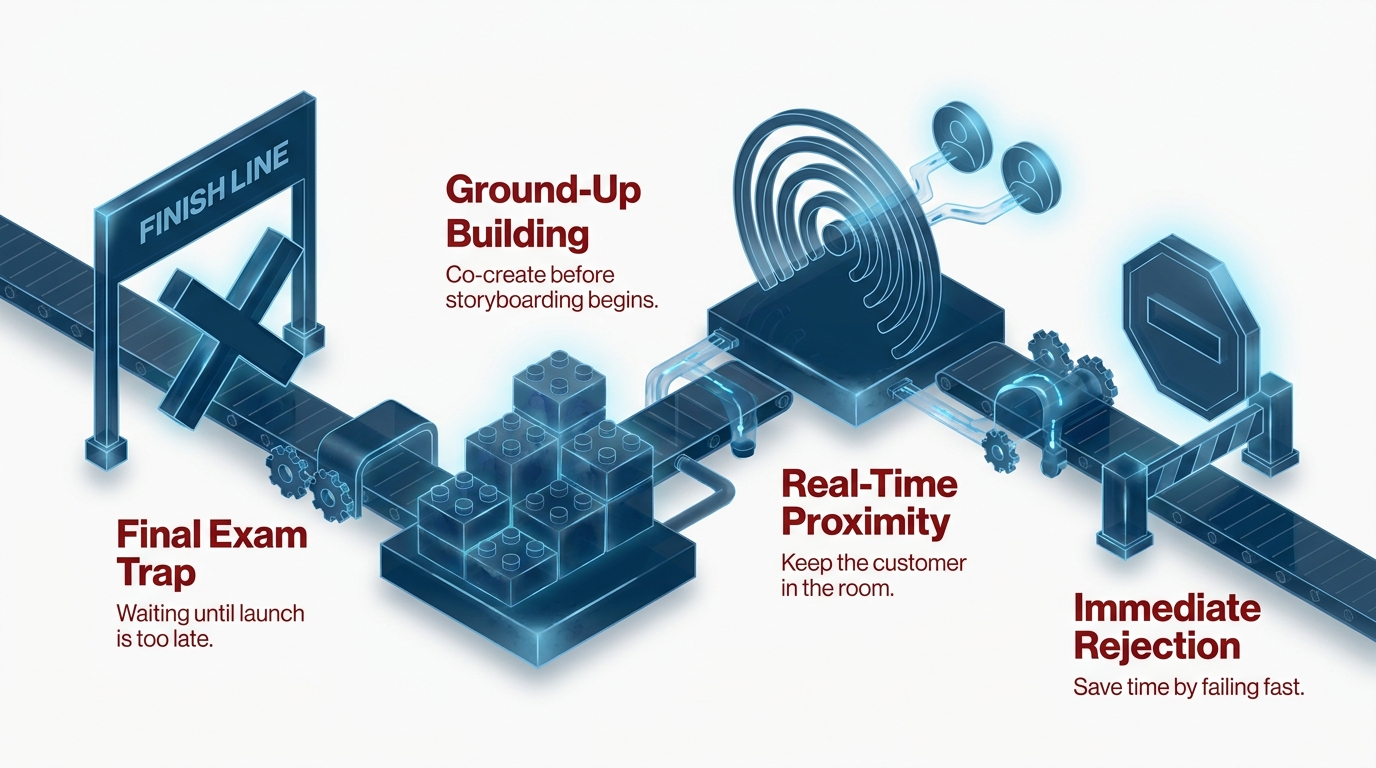
Right now, you treat your customer as a final exam. You spend months building a strategy, finalizing a creative concept, and developing the messaging. Then, right before launch, you run it past consumers to see if they like it.
That is too late. You don't want to run ideas past your customer when they are nearly finished. You want her helping you build them from the ground up.
In a perfect world, your customer sits next to you in every status meeting. When somebody suggests a new hook for a digital ad, you turn to her and ask if she cares. She tells you immediately that she doesn't, and you abandon the idea before wasting two weeks on storyboards. Co-creation is about proximity.
Fire Your Agency from the Devil's Advocate Role
When I tell CMOs they need an adversary in the room, they usually point to their agency of record. They believe the agency acts as an objective third party.
"Your team can't be that person. And the agency can't be that person either." — Will Leach
Agencies are explicitly incentivized to keep ideas moving forward. If an agency routinely kills your brand team's ideas in their infancy, they get labeled as difficult. They aren't seen as team players. Eventually, they lose the account. Your internal team is paid to say yes to growth. Your agency is paid to say yes to your team.
The only entity in the entire ecosystem who doesn't get paid to agree with you is your customer. Saying no is completely free for her. She is the only party with a genuinely unbiased perspective, which makes her the only qualified devil's advocate.
Run the Three-Reason Test
Before you approve another dollar of funding for a new campaign, you need to prove that you actually understand the friction your brand faces.
I use a specific diagnostic tool with brands to expose confirmation bias in real-time. It requires no budget and takes about thirty seconds.
"If you can't come up with three things that she would say this is a terrible idea and has to be based on some recent data, then you don't really know enough about your customer to approve that plan." — Will Leach
Not one reason. Three. And they cannot be generic marketing fluff like "she might not see the ad." They must be specific, psychologically rooted reasons why your customer will actively reject your premise. If you and your team sit in silence when asked for three reasons your idea will fail, your confirmation bias has entirely blinded you to reality.
Put Bevi in the Empty Chair
The logistics of co-creation have historically been the barrier. You cannot literally hire a customer to sit in your office forty hours a week. Traditional research is too slow and too expensive to deploy for every micro-decision your team makes on a Tuesday afternoon.
This is where behavioral science intersects with modern technology. You don't need a live human in every meeting if you have an emotionally intelligent brand persona.
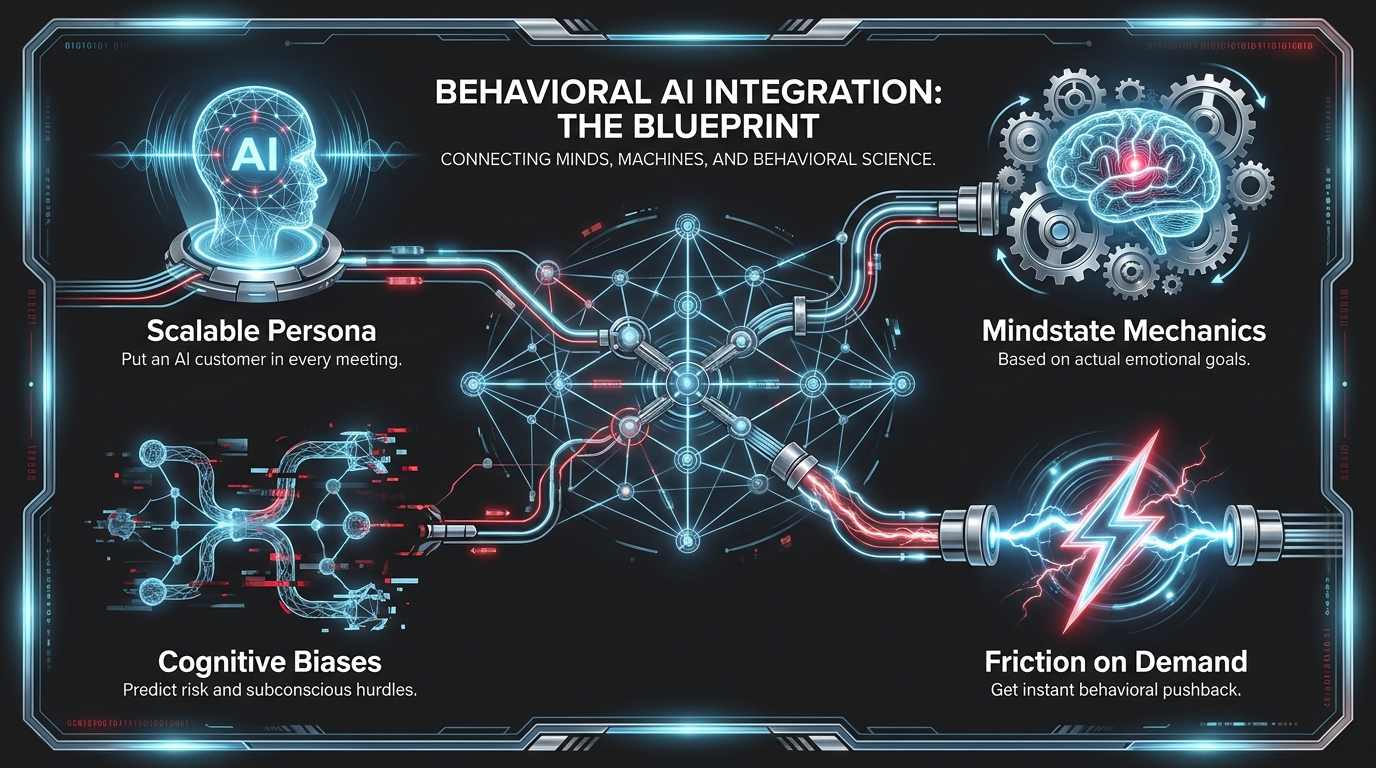
Enter the Bevi AI assistant—a proprietary artificial intelligence model trained specifically on your target customer’s psychological goals, motivations, regulatory approach, and cognitive biases to predict how they will actually make decisions.
Most brands are using AI as a cheap parlor trick—asking ChatGPT to act like a 35-year-old mom of two. That is a demographic digital twin. It is functionally useless because demographics do not drive behavior. Mindstates do.
"I say a plan isn't tested until someone who wants it to fail has had a good go at it." — Will Leach
When you build an AI persona grounded in the actual mechanics of how your customer makes choices, you finally have a scalable devil's advocate. You can open your phone in the middle of an executive presentation and run your proposed messaging through the persona. It won't just tell you if she likes it. It will tell you how she feels about it, how she evaluates the risk, and why she will walk away from it.
You get the friction you need, exactly when you need it, before you commit organizational capital to a bad idea.
Inside the Live Session
When I teach behavioral marketing to executives at SMU and Texas A&M, we run this exact scenario live. We take a brand team's "bulletproof" pitch deck—the one that has already been pre-socialized and approved by leadership—and we force it through the lens of a prevention-focused consumer model.
The room always goes quiet.
Suddenly, the messaging that the executive team loved is revealed to be triggering massive subconscious anxiety for the actual buyer. The "innovative" feature the R&D team spent six months perfecting is identified as a cognitive hurdle the customer refuses to jump over. By stripping away the internal echo chamber and forcing the team to face a psychologically accurate simulation of their customer's resistance, we dismantle months of confirmation bias in an afternoon.
The Behavioral Imperative
Your competitors are sitting in conference rooms right now, high-fiving each other over ideas that are destined to fail. They are pre-socializing their decks. They are neutralizing executive pushback. They are building massive, expensive campaigns designed to survive internal meetings rather than market realities.
You have a choice. You can continue playing the corporate alignment game, padding your failure rates with comfortable consensus. Or you can intentionally invite an adversary into your planning process.
Look at the major initiative your team is working on this week. Pull up the strategy deck. Look at the core premise. Now, write down three data-backed reasons your most important customer will reject it outright.
If you can't do it, your idea isn't ready. Go find someone to tear it down.
Want marketing that works on how people really decide? Join marketers who get a weekly dose of the psychology behind why customers buy, and how to use it.
Click here to subscribe to my weekly newsletter.