

Behavioral Brand Strategy: Activating Consumer Mindstates
Executive Summary
Transition from traditional demographic profiling to non-conscious Behavioral Discoveries® to identify the true psychological drivers behind consumer action.
Deploy the Mindstate Activation Blueprint to align brand creative with the exact regulatory focus and motivational state of your target buyer, eliminating subconscious friction.
Leverage proprietary Decision Landscapes® mapping to understand the environmental and emotional contexts in which your customers actually make purchasing choices.
Utilize behavioral intelligence tools like the Bevi AI assistant to scale subconscious activation across all omnichannel brand touchpoints with scientific precision.
Shift brand strategy from convincing the rational brain (System 2) to triggering the intuitive, decision-making engine (System 1) for higher conversion and brand loyalty.
The Strategic Shift
The Status Quo: The Trap of Demographic Dependency
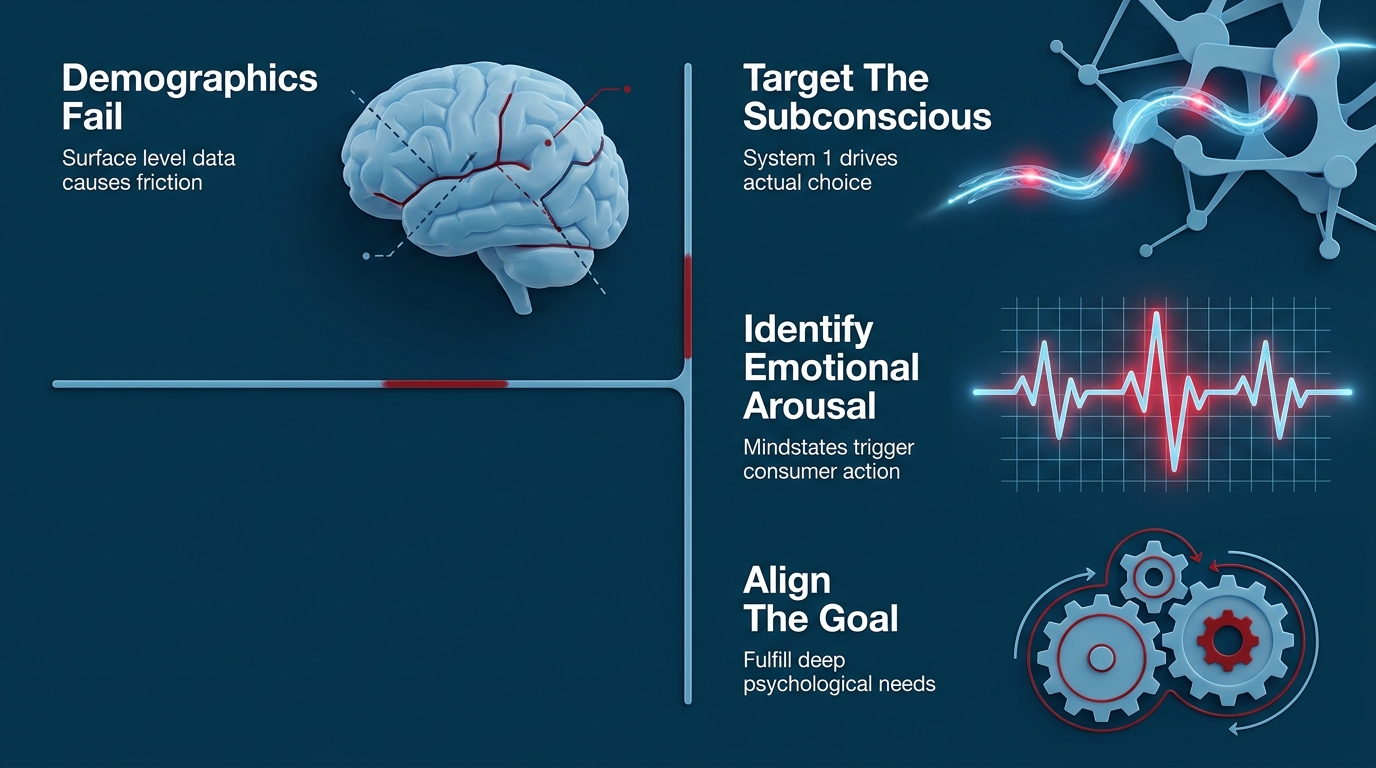
For decades, senior brand leaders and CMOs have relied on a foundational but fundamentally flawed approach to understanding their customers: demographic profiling. In the old way of building brand strategy, marketing teams spend millions gathering surface-level data—age, income brackets, geographic locations, and self-reported preferences—to construct buyer personas. These personas assume that consumers are highly rational actors who weigh the pros and cons of every purchase, carefully evaluating feature sets and price points before making a logical decision.
However, this traditional methodology targets the rational brain, also known as System 2 thinking. The problem with marketing to the rational brain is that it is biologically designed to be the gatekeeper of resistance. When you present logical arguments, specifications, or generic value propositions, you inadvertently invite the consumer to critique, compare, and ultimately delay their purchase. This demographic dependency explains why so many brands struggle with massive customer acquisition costs and low conversion rates, despite having vast amounts of data at their disposal. The data is simply looking at the wrong part of the human experience.
The Modern Alternative: Subconscious Mindstate Activation
The modern, behavioral-science-driven alternative abandons the illusion of the rational consumer. Will Leach advocates for a radical pivot away from surface-level demographics and toward the deep, non-conscious drivers of human behavior. Because 95% of all human decision-making occurs in the subconscious mind (System 1), brand strategy must be engineered to speak directly to this intuitive, automatic processor.
Rather than asking "who" the customer is on paper, Will Leach’s methodology focuses on "why" they act in the moment. By applying behavioral science to brand strategy, marketers can bypass cognitive resistance entirely. This approach relies on identifying temporary states of high emotional arousal—mindstates—and scientifically designing creative, copy, and user experiences that align perfectly with those states. When a brand shifts its focus to activating the subconscious, marketing ceases to be a battle of persuasion and instead becomes a seamless facilitation of natural human instinct.
The Core Philosophy
To truly understand how to influence consumer behavior, brand leaders must embrace a fundamental mental shift: people do not buy products; they buy the fulfillment of deep-seated psychological goals. This is the core philosophy that drives Will Leach’s approach to behavioral design. It is not enough to have a superior product. If your brand messaging does not align with the consumer's non-conscious motivations at the exact moment of decision, you will lose to an inferior competitor who has successfully tapped into their psychology.
Backed by Mindstate Group's rigorous research foundation, which includes over 100,000 consumer interviews and behavioral experiments, Will Leach has mapped the specific psychological conditions that cause consumers to take action. When consumers enter a purchasing environment, their normal rules of logic are suspended, replaced by an automatic, goal-oriented state of mind.
"A mindstate is a temporary state of high emotional arousal where human beings rely heavily on non-conscious, automatic behaviors to make decisions. When you understand the specific mindstate your buyer is in, you have the exact psychological blueprint to influence their choices without them even realizing they are being influenced." — Will Leach
This framework dictates that you must uncover the specific goal the consumer is trying to achieve (their motivation) and the strategic approach they take to achieve it (their regulatory focus). When these elements combine, they form a behavioral profile that dictates exactly what colors, words, framing, and heuristics will trigger a purchase. The Mindstate Activation Blueprint provides the architecture to take these scientific principles out of the laboratory and apply them directly to commercial brand strategy.
The Implementation Blueprint
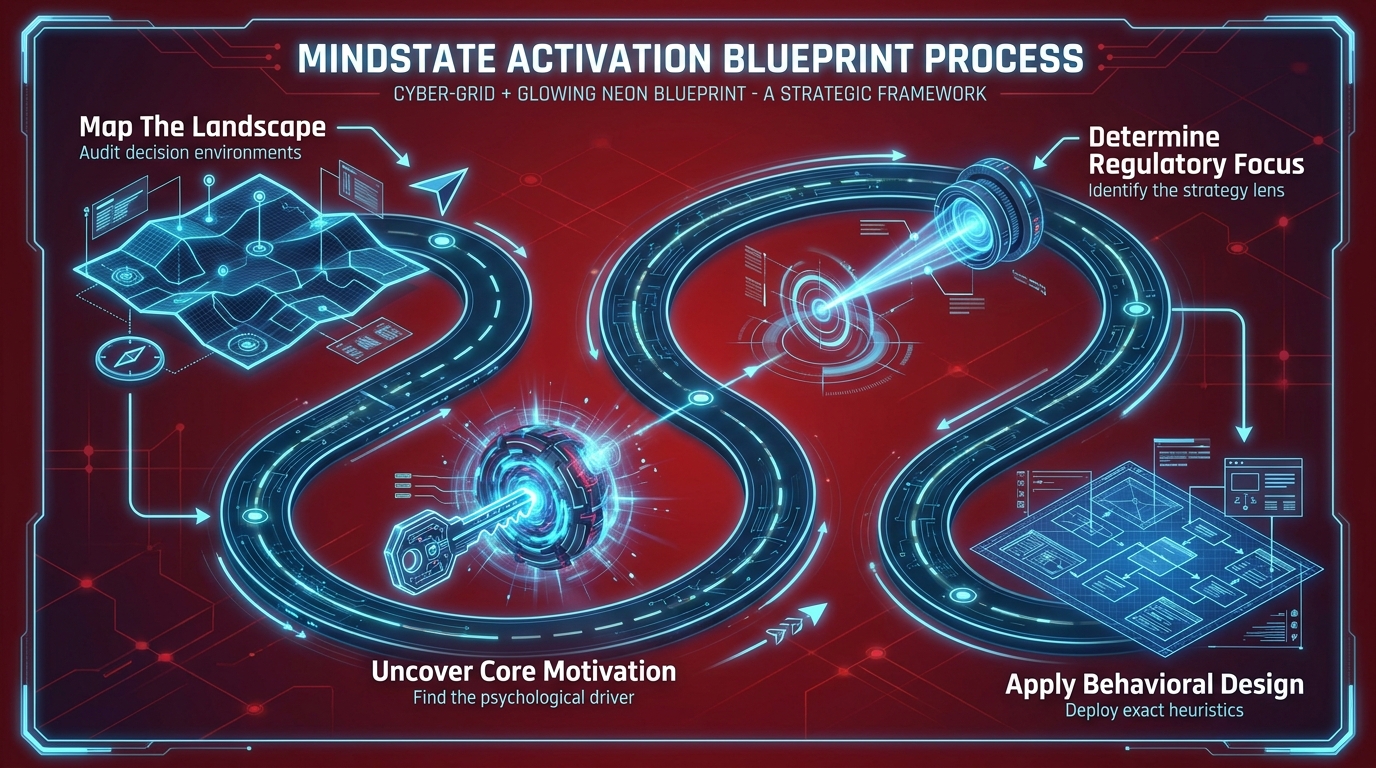
Translating behavioral science theory into a high-ROI brand strategy requires a methodical, step-by-step approach. Will Leach has developed a comprehensive system that allows brands to engineer their marketing assets for maximum psychological impact. Here is how to implement this behavioral architecture within your organization.
Step 1: Map the Decision Landscapes®
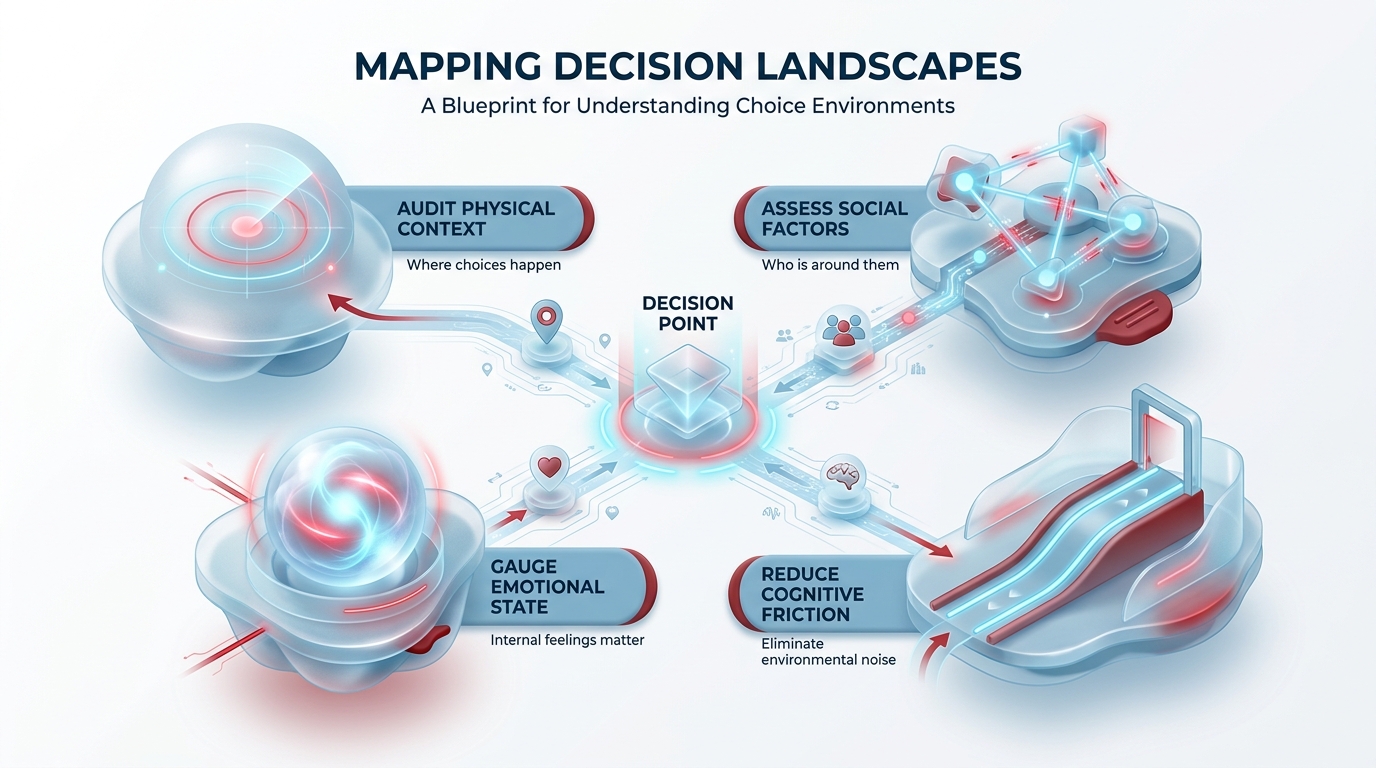
The Action: Before you can write a single piece of copy or design a visual asset, you must first understand the environment in which your customer is making their choice. Will Leach calls this mapping the Decision Landscapes®. This involves analyzing the physical, social, and emotional context surrounding the moment of purchase. Are they buying on a mobile device while distracted on a train? Are they in a crowded retail aisle feeling overwhelmed? You must audit the exact environmental triggers that are active when they encounter your brand.
The Business ROI: Context dictates behavior. By understanding the environment, brands can radically reduce customer acquisition costs (CAC). When you design marketing for the actual context of the decision rather than a theoretical vacuum, you eliminate friction. This leads to higher engagement rates and ensures your media spend is not wasted on messaging that contradicts the consumer's real-world environment.
"We are biologically wired to ignore anything that doesn't help us achieve our immediate subconscious goals. If your brand isn't tapping into the active mindstate of your buyer within their specific environment, you are just expensive noise." — Will Leach
Step 2: Uncover the Core Motivation
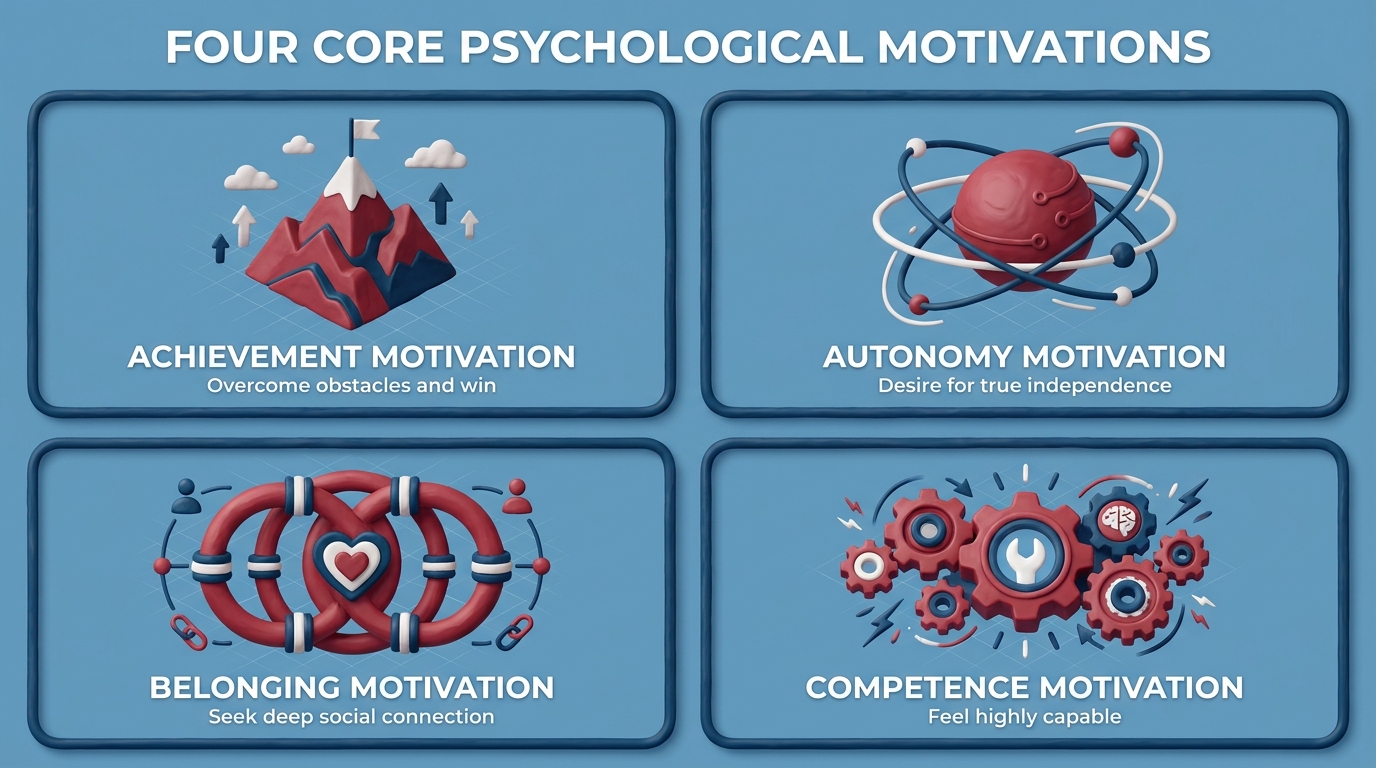
The Action: Once the landscape is mapped, you must identify the dominant psychological motivation driving the consumer. Will Leach identifies four core motivations that govern human behavior: Achievement (the desire to overcome obstacles and win), Autonomy (the desire for independence and uniqueness), Belonging (the desire for social connection and alignment), and Competence (the desire to feel capable and qualified). You must conduct Behavioral Discoveries® to observe which of these four motivations is active in your buyer.
The Business ROI: Identifying the correct motivation allows you to position your product as the ultimate vehicle for psychological fulfillment. This creates intense brand loyalty and drastically improves lifetime value (LTV). When a product satisfies a core human drive, price sensitivity drops significantly because the consumer perceives the brand as an essential part of their identity.
Step 3: Determine the Regulatory Focus
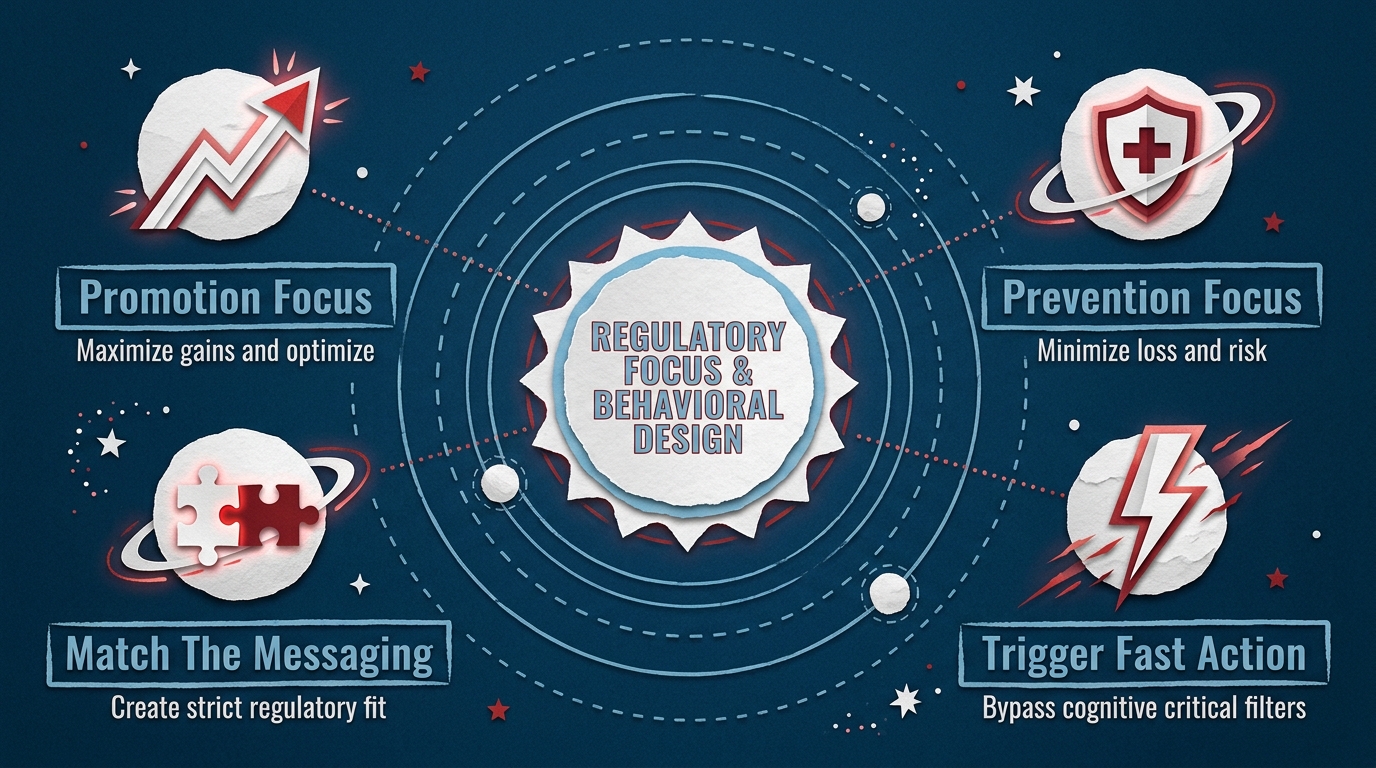
The Action: Motivation tells you what the consumer wants, but regulatory focus tells you how they want to get it. Will Leach stresses the critical importance of identifying whether your buyer is operating with a Promotion focus (seeking to maximize gains, optimize, and reach for the stars) or a Prevention focus (seeking to minimize losses, avoid mistakes, and maintain security). You must analyze your audience to determine which lens they are looking through.
The Business ROI: This step dictates the framing of your entire marketing campaign. Matching your messaging to the buyer's regulatory focus creates "regulatory fit," a psychological state that makes a message feel intuitively right. This phenomenon can double or triple conversion rates on landing pages and ad creatives because it bypasses the brain's critical filters.
"Marketing to a promotion-focused buyer with prevention-focused messaging creates subconscious friction. They won't know why they don't want your product, but their brain will tell them to walk away." — Will Leach
Step 4: Construct the Behavioral Design
The Action: With the motivation and regulatory focus identified, you now execute the Mindstate Activation Blueprint. This involves selecting the specific behavioral heuristics (mental shortcuts) that align with your buyer's profile. If your buyer is in a "Cautious Competence" mindstate (Prevention + Competence), your design must utilize heuristics like Authority (expert endorsements) and Loss Aversion (what they lose by not acting). If they are in an "Optimistic Belonging" mindstate (Promotion + Belonging), you must use Social Proof (user-generated content) and In-Group Favoritism. Every word, color, and image must be deliberately chosen to trigger the specific mindstate.
The Business ROI: This creates an immediate, visceral reaction from your audience. Behavioral design transforms generic marketing collateral into scientifically optimized conversion engines. By eliminating guesswork and relying on proven psychological triggers, marketing teams can significantly increase the ROI of their creative testing and reduce the time to market for new campaigns.
Step 5: Scale with Behavioral Intelligence
The Action: The final step is to ensure that these behavioral science principles are applied consistently across every single touchpoint—from email marketing to packaging to sales scripts. To achieve this at scale, organizations must leverage technology. Will Leach advocates for the integration of the Bevi AI assistant, a proprietary tool that guides marketing teams in generating mindstate-optimized copy and strategy instantly. Teams must use this behavioral intelligence to audit and optimize all existing assets.
The Business ROI: Scaling behavioral intelligence ensures a cohesive omnichannel brand experience. When every touchpoint speaks to the exact same subconscious goal, the brand experience compounds, creating a powerful "halo effect." This not only drives immediate sales but solidifies long-term brand equity in the marketplace.
"Behavioral science isn't a theoretical exercise; it's a measurable, repeatable architecture for growth. When you align your creative with human nature, the results compound instantly." — Will Leach
The Behavioral Imperative
The future of brand strategy belongs to those who understand the non-conscious drivers of human behavior. As markets become increasingly saturated and consumers become numb to traditional advertising, the brands that rely on demographic data and rational arguments will find themselves rapidly outpaced. The behavioral imperative is clear: you must stop marketing to who your customers are on a spreadsheet, and start marketing to what their subconscious mind is trying to achieve in the moment.
Click here to access our weekly newsletter on growing your business using behavioral science