
The Balcony Trap: Why Your Marketing Copy Is Failing
Executive Summary
You're destroying perfectly researched concepts by rewriting the final copy internally. Brands co-design concepts with customers, but letting internal teams, agencies, and legal departments massage the final words creates a translation gap that ruins the message.
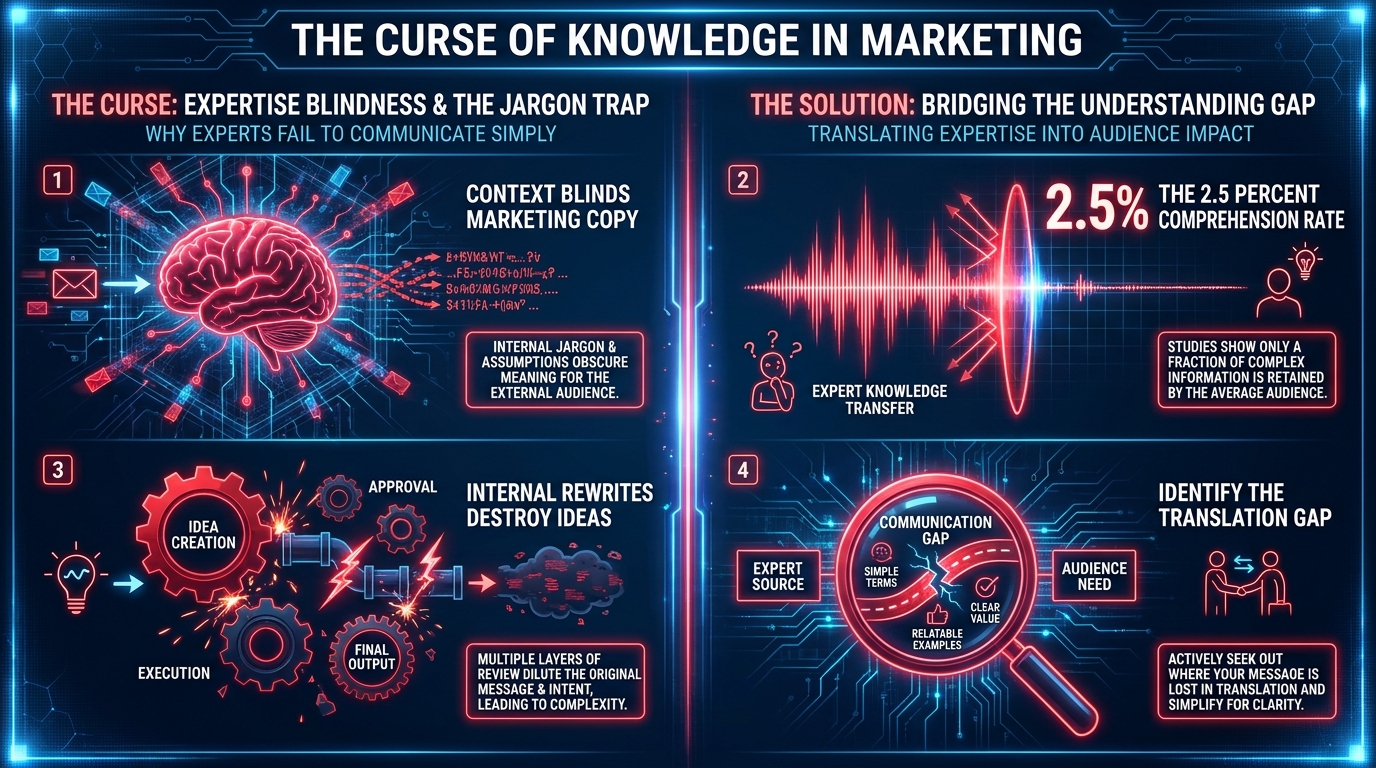
You are blind to how your copy actually sounds because you have too much context. A 1990 Stanford study on the "curse of knowledge" shows communicators predict a 50% comprehension rate, but the actual success rate is only 2.5%.
You don't need customers to write your ads, but you do need them to fix words that don't match their tone. Running a five-customer test where you ask them to circle just one word they would change reveals exactly where your vernacular fails.
You can automate this process using behavioral intelligence. The Bevi AI assistant—a behavioral intelligence and activation system created by Mindstate Group—functions as a 24/7 customer persona that flags off-brand words and explains the psychological reasoning behind its suggested changes.
The Strategic Shift
You do the research. You uncover the deep wants and desires. You get the strategy perfectly right. And then you ruin it by writing the final words yourself.
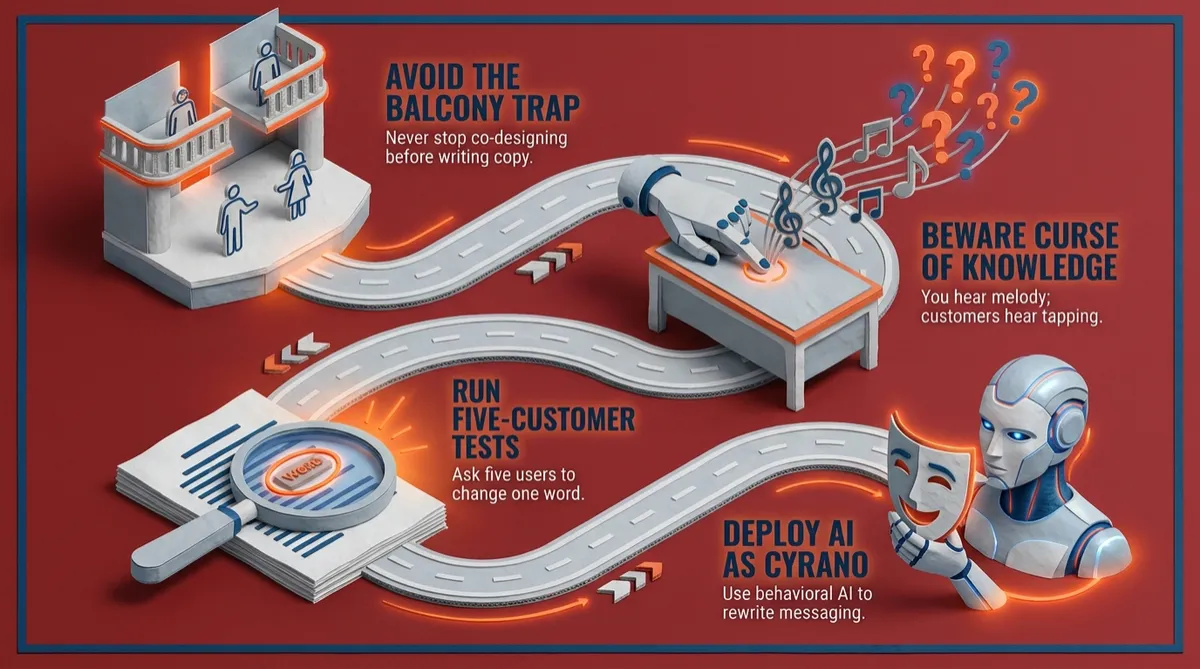
Think about the classic Steve Martin film Roxanne, based on the play Cyrano de Bergerac. Christian is a great-looking guy trying to woo Roxanne. He stands under her balcony and delivers his message: "I love you."
Roxanne tells him to embroider it. He just repeats, "I love you so much." She closes the door.
Christian had the face. He had the right target. He even had the right underlying strategy. But he didn't have the words. Cyrano had to hide below the balcony and feed him the exact language that actually wooed her. Christian's idea wasn't wrong. It just wasn't totally finished.
If you are a brand marketer, you do this every day. You do incredible early-stage research with your customers. You figure out what they want. But then you succumb to the illusion that because the customer shaped the early idea, your final copy will automatically carry her voice. It doesn't. There's a barrier between what you say and what your customers hear. You try to force your corporate words through a crack in the window, instead of letting your customer act as your Cyrano and give you the words that actually work.
The Core Philosophy
Your message fails because of the curse of knowledge.
In 1990, Stanford psychologist Elizabeth Newton ran a study. She split people into two groups: tappers and listeners. The tappers knocked out the melody of a famous song, like Michael Jackson's Billie Jean, on a desk. The listeners had to guess the song.
When asked to predict their success, the tappers assumed 50% of listeners would guess correctly. The actual success rate? Three out of 120 people. Just 2.5%.
You know the background melody of your brand. You know the strategy. When you write headlines, it feels perfectly clear and intuitive to you. But your customers don't have your context. They don't hear your melody.
"Your customer just hears knocking even though you're writing headlines." — Will Leach
The Implementation Blueprint
Run the Five-Customer Headline Test
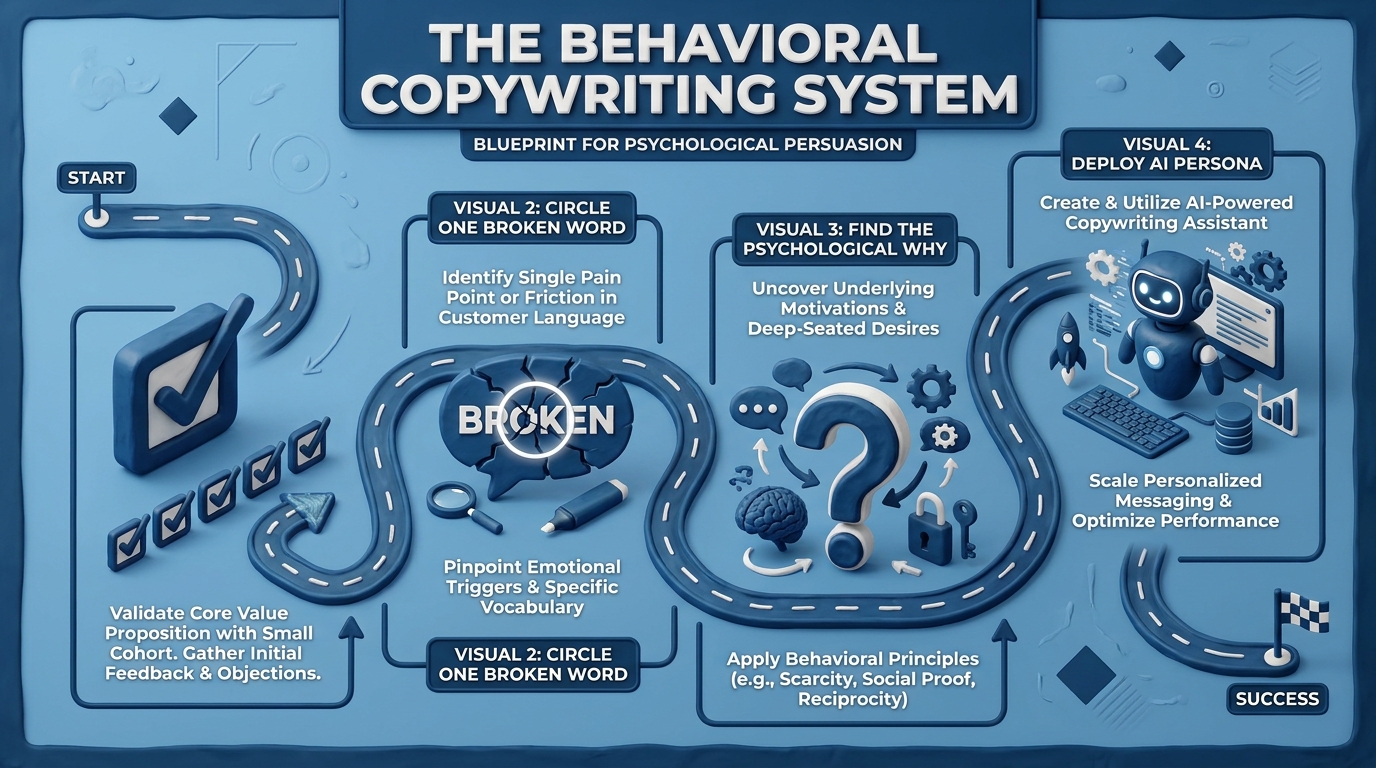
Take one approved headline you plan to ship this month. Show it to just five customers. Do not ask them if it's clear. Ask them one specific question: "Circle one word that you would change. What would you say instead?"
Business ROI: If three out of the five people circle the exact same word, you immediately spot a failure in your tone. You catch the translation gap before the ad ships, allowing you to swap in a word that aligns with their actual vernacular.
"It's not what you say to your customers that matters. It's what your customers hear." — Will Leach
Ask for the Psychological "Why"
When a customer flags a word to change, don't just blindly accept the rewrite. Ask them why they believe that specific word doesn't sound like them. Find out if their objection comes from a goal perspective, a motivational perspective, or the way you're framing up your features.
Business ROI: When a customer maps a word choice back to their subconscious preferences and cognitive heuristics, you get a reliable, repeatable indicator of how they actually make decisions. You stop guessing and start writing to their specific decision-making process.
Deploy a 24/7 Behavioral Persona
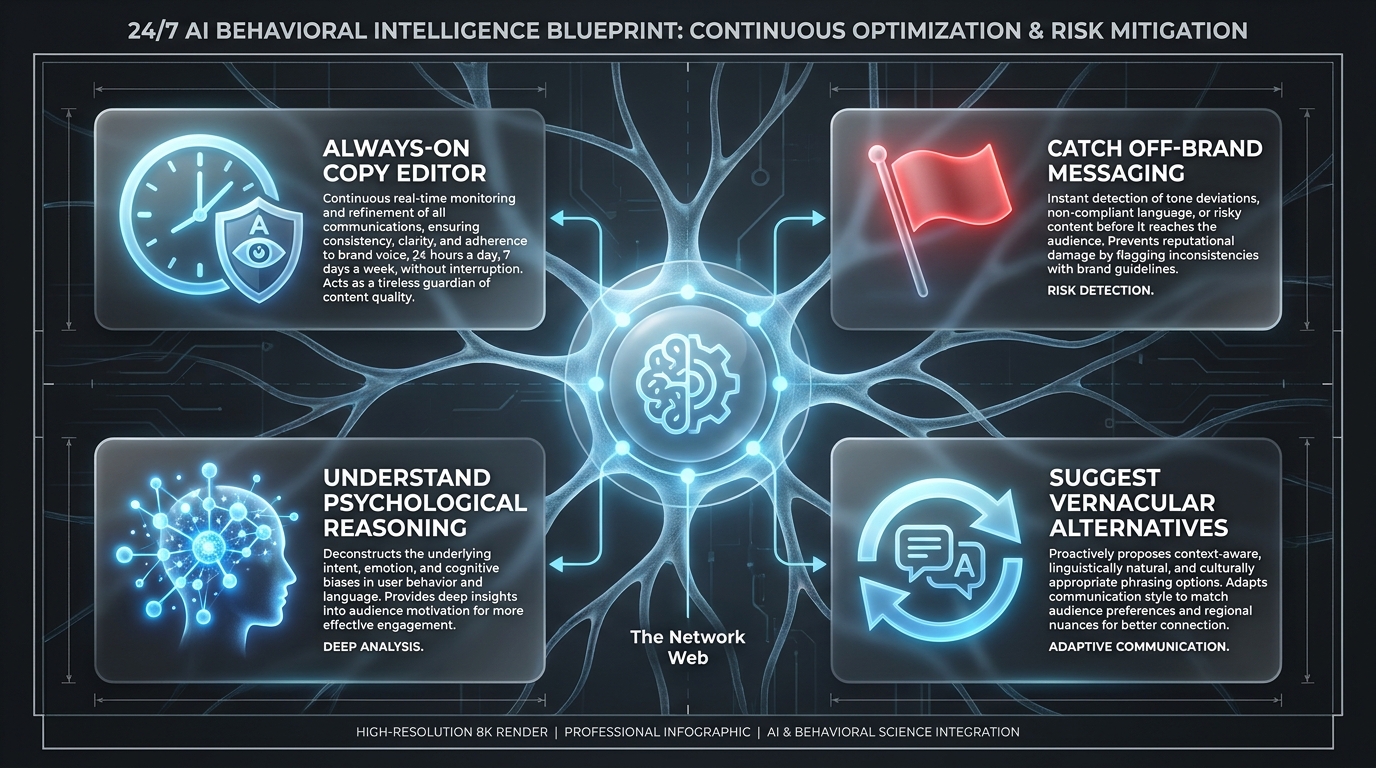
You can't keep five customers on call around the clock to review every email and Facebook ad. Instead, feed all the training data and real language from your past research into a behavioral intelligence tool like the Bevi AI assistant. Ask Bevi to flag words in your approved copy that don't sound like your customer, explain the psychological reasoning for the flags, and suggest alternatives.
Business ROI: You get an always-on editor that catches off-brand messaging before it ships. You retain the exact tone and voice of your target audience without the logistical nightmare of hiring real customers to be available 24 hours a day.
"Take your line and fix the words that don't sound like them." — Will Leach
Inside the Live Session
Early in my career, doing research for a utility company, we used a methodology called Customer Link Workshops. The process was brilliant on paper.
Monday and Tuesday, we ran focus groups to understand deep customer wants and needs. Wednesday and Thursday, we used triads to refine those ideas. By Friday, we had testable concepts co-designed entirely with the customer.
Then we took those concepts back to the office.
The brand managers stepped in to rewrite them because that's just what brand managers do. They handed the messaged concepts to the ad agency, who tweaked things further. Then legal took a look, cut things down, and dictated what the agency could and couldn't say. We launched the final product.
The customers rejected it. The balcony door closed.
The overall idea belonged to the customer, but the copy itself was completely divorced from their voice. We lost it in translation. Watch the full session to see exactly how this translation gap happens, and why letting internal departments massage your copy destroys the very research you paid for.
The Behavioral Imperative
You spend massive budgets figuring out what your customers want, only to stop your co-design one step before you write the words that actually sell.
Stop pushing the customer away at the finish line. When you use behavioral intelligence to keep your customer's true voice in the room during the final copywriting phase, you stop tapping melodies they can't hear. You get them to listen, care, and act.
Take your next approved headline. Find five customers. Ask them to circle one word they would change. Do it before you spend another dollar on media.
(To learn more about applying behavioral sciences to high-stakes marketing decisions, visit mindstategroup.com.)